

The light that lifts
On navigating liminal spaces, and finding devotion in the luminous dark

Searching for the light in a recent period of profound darkness required me to sit with the question — Can we truly know life if we’re afraid of getting to know its opposite, death?
It birthed this personal exploration of lessons on living and dying, distilled from the wisdom of The Tibetan Book of the Dead, The Way of Tea, and the greatest play of our age
A letter from the bardo, in three parts
꩜ Part I — Sometimes in life, a fall

꩜ Part II — In death, learning to hear the luminous song

꩜ Part III — The imaginal comes to life
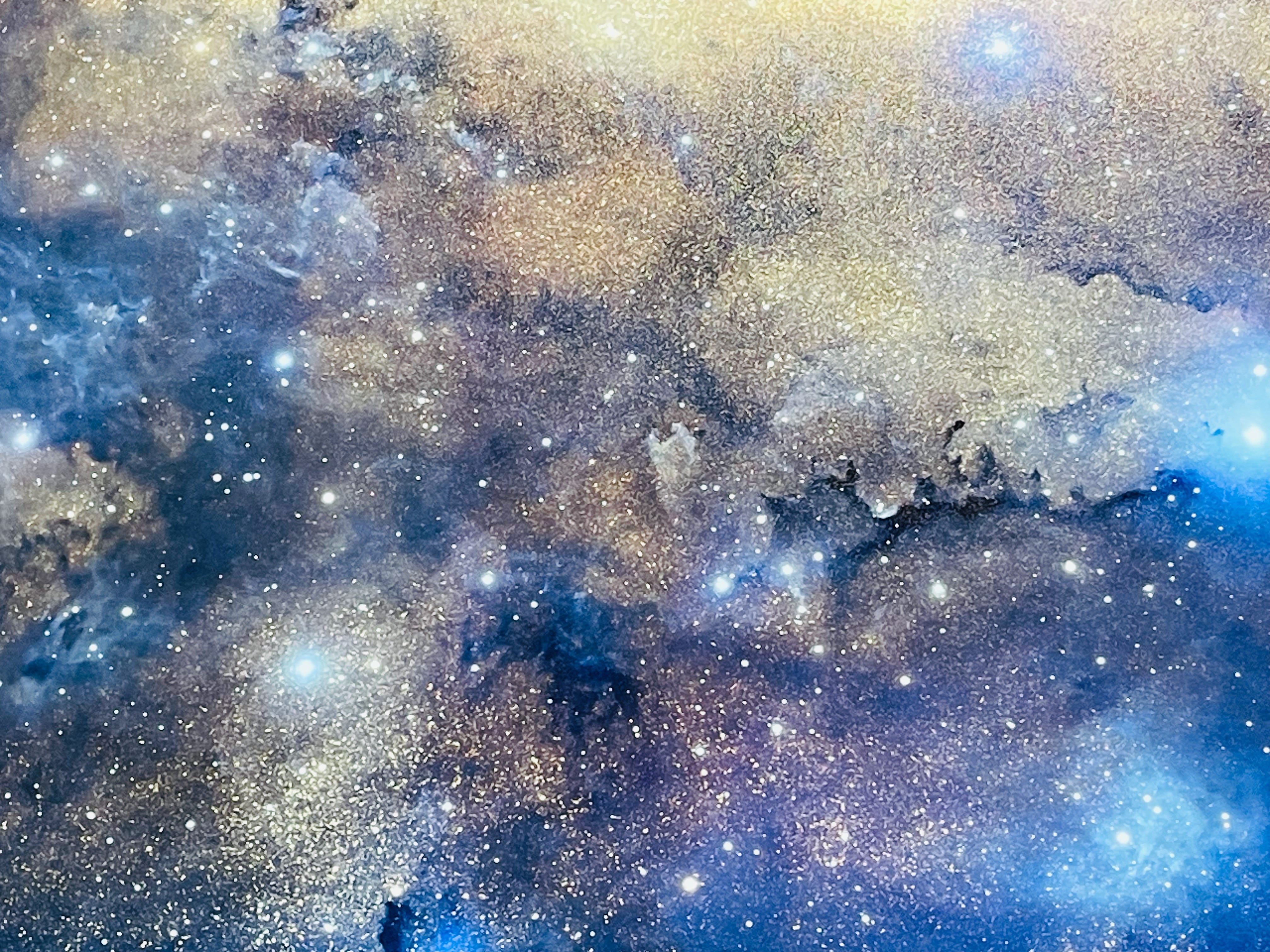
Bardo | Classical Tibetan: བར་དོ་
Sanskrit: antarābhava (existence in the interval)
Chinese and Japanese: 中有 / 中陰 (the middle existence, inside the shadow / the Yin)
an intermediate state of existence between death and rebirth, a mind-state rather than a place, a transitional state that is neither here nor there, not of this life but also not of the next.1
Part I
꩜ Sometimes in life, a fall ꩜
On the threshold of the lunar new year, I stood beneath the invisible light of January’s new moon in Aquarius, setting fire to a bridge.
It was the bridge between my mother and a particular version of the daughter I had been to her.
As the bridge collapsed in flames before my eyes, so did my inner world.
After the fire, I wandered into a maze, and for a long time, couldn’t find my way back out.
It was a maze shaped from words and memories that connected together to form stories — stories about who I was, and about who I could never be, because of who and where I had already been.
At some point after losing myself in the maze, the ground beneath my feet fell away, and I plunged into a darkness that was soaked with a heaviness I had never encountered before.
The darkness seemed infinite and engulfing, drawing me to question if I had found death.
Within these folds, I found that I had lost myself, my words, my voice, my will and capacity for action, my hopes, dreams, and wishes.
There was no light for me to see a way out. It was all that I might have imagined The End to be.
An End that had no After — this appeared to me as the only thing that seemed real.
Yet, in the months following, learning to adjust my eyes to the darkness helped me see glimpses of light I couldn’t see before. It turns out that a certain darkness is needed to see the stars.2
What I learnt to see was that, in order for an After to follow The End, the After needed to be created by me, while I was inside The End.
And all of life is but preparation for death
Since ancient times, humans have occupied themselves with contemplations and philosophies regarding death, and what happens during and after death.
One outcome of this was the origin in the 8th century (around the year 750) of a medieval Buddhist literature classic, Bardo Thodol, more popularly known as The Tibetan Book of the Dead.
Offering a Tibetan Buddhist perspective on the universal theme of death and dying, it provides vivid descriptions of the different bardos (intermediary states) between death and rebirth.3
I first came to know of The Tibetan Book of the Dead three and a half years ago, on a late summer evening, sitting by candlelight high up in the French Alps.
Unknown to me at that time, that ongoing contemplation would set off a series of decisions and actions that would bring me multiple times to the liminal thresholds between metaphorical death and rebirth, including the one I am writing about here.
All of them have steered me to this insight, which has been explored across many cultures and civilizations, and which I have felt in my own being as truth — we can’t understand life if we don’t understand death.
In my most recent experience of metaphorical death within this life I am living, the unprecedented profundity and intensity of the darkness I experienced led me to dive more deeply than I ever had before into engaging with ancient wisdom about death.
In particular, the ouroboros relationship between life and death, and what happens in the space that opens up in between.
What deeply fascinates me about The Tibetan Book of the Dead is that it’s meant to be read aloud (by the living) to the dead4 — in other words, corpses are the book’s intended audience.
This intention reflects the Tibetan Buddhist belief that death is not the ultimate end, but rather, presents us with a space, an opening, an opportunity.
The belief (common across several Asian cultures) is that death is followed by a 49 day liminal period of intermediate existence prior to rebirth.
And in this space of intermediate existence between one life and the next, there is still an opportunity for enlightenment. The aim of enlightenment is liberation from what Buddhists see as the tyranny of cyclic existence (which I explore in this essay as a metaphor for living life unconsciously bound by a conditioned, repetitive pattern that is unhelpful) —
“birth, suffering, death, then rebirth into another life of suffering and death, on and on without end… unless we do something about it”.5
The bardo offers a space within which we can do something about it, provided that we know how to recognize the bardo when we are in it, and we understand what it is for.
꩜
There are six states of bardo6 that Tibetan Buddhism describes us passing through, in the course of life, dying, death, and the intermediate existence of after-death / before-life.
In the course of living, we pass through the first three states of bardo —
〰️ "The first state, the Bardo of Birth and (Waking) Life begins when we take birth and endures as long as we live."7
〰️ The second state, the Bardo of Dreaming, and the third state, the Bardo of Meditation, are states accessible to us within the first bardo of birth and life, through the respective processes of dreaming and meditation.
In this way, we can also think about the bardo as a metaphor for times "when the usual way of life becomes suspended, where the grip of external constraints diminishes".8
This opens up a space for us to encounter (welcome or unwelcome) aspects of ourselves that might have been crowded out by the way our lives typically move.
At the moment of death, or more specifically, when the process of dying begins but is not yet complete, we pass through the fourth state of bardo, the Bardo of the Moment of Death —
This is where we encounter the opportunity to either be fully lucid and conscious about inhabiting this distinctive moment of dying (becoming a witness to "the clear light of death"), or we lose lucid awareness and effectively black out.
The capacity to remain in the clear light of death, rather than blacking out, is believed to be accessible by those who, in their time of living, have acquired experience in cultivating this state of clear consciousness and lucidity (for example, through meditation practice).
At the moment right after taking the final inner breath, we enter the fifth state of bardo, known as the Bardo of Luminosity of Our True Nature (what Buddhists refer to as the Buddha Nature within everyone) —
Within this bardo, visions and sounds spontaneously occur, which are experienced as "a welling of profound peace and pristine awareness", though again for those who have practised learning to recognize this as their true nature.
Those who have not cultivated such capacity are believed to experience a deluded nature of this state, such as in the form of fear-inducing hallucinations. This speaks to me of the inner darkness we find ourselves battling from time to time, and occasions where we don’t make it through the battle.
This description of the fifth bardo of luminosity can also be seen as the context for the literal meaning of the Bardo Thodol, which is "Liberation through Hearing during the Intermediate State".
Perhaps the reading aloud of the Bardo Thodol offers those inside the bardo the auditory guidance that can help them navigate their way to liberation during the in-between state.
At the moment of taking the first inner breath in a new form of consciousness, we enter the sixth state of bardo, a state of transmigration known as the Bardo of Becoming or Rebirth.
꩜
As I understand the six states of bardo, life itself offers a series of opportunities to practise, and cultivate readiness, for making the most of the potential held by the space that opens up during suspensions of life.
Especially at the most important suspension of all — the moment we find ourselves between after-death and before-life, be it literally or metaphorically.
Buddhist practitioners and teachers have observed how the concept of the bardo offers wisdom for navigating the uncertainty and the unknown between the numerous endings and beginnings that adorn our landscapes of daily living.
"Death isn’t just something that happens at the end,” teaches the Buddhist nun, Pema Chödrön. “Life is continually arising, dwelling, ceasing, and arising. It’s a cycle that goes on every day, and continues to go on forever."9
We can enter the bardo during life itself, at moments of existential crossroads, where we may encounter suspensions of meaning or face a collapse of the framework or rules that we once lived our lives by, and find that nothing has (yet) appeared to take its place.
At these times, the same principles apply for discovering how best to navigate our way through.
Pema Düddul, a Tibetan Buddhist teacher, scholar, and professor, explains that —
"Etymologically, the word bardo breaks down into ‘bar’, which translates as movement or flow, like a stream, and ‘do’ which translates as a stepping stone or island in the stream.
The idea of an island of stillness within a stream of movement is profoundly important in the Buddhist teachings, because it points to the hidden profundity of present experience, to the immediacy that is being in the now, which can open us to a direct and intimate experience of what Tibetan Buddhists call our true nature, or Buddha Nature."10
An island of stillness within a stream of movement.
This idea, like a lotus in a pond, bloomed in resonance with my inner felt sense of the encounter I had with one of the first glimpses of light to have found me, while I felt myself drowning in a bottomless pool of darkness.
As I flailed and thrashed around in the dark, I was struck by the light of awareness that I had fallen in here because I had trapped myself in a maze of stories that my mind had created about me.
This didn’t feel too far from the "fear-inducing hallucinations" described in the fifth state of bardo.
Earlier, while on the precipice of birthing a dream that I had into life, I found myself entering a space of feeling completely stuck, numb, and frozen. I was unable to take a next step forward, despite how much I knew I wanted to.
Seeing that I wasn’t making the progress I wanted in life, I felt full of resentment for the complex intergenerational dynamics and experiences that had shaped me into the limited version of the self that I believed I would always be.
My response was to ferociously and relentlessly dissect and analyze my self in the various ways I had learnt how — from different cognitive, psychological, and somatic perspectives — so that I could find out what exactly was wrong.
And I did this using the most powerful tool I had — the dissection knife that was my mind.
If my dissection went far enough, I thought, I would finally find the real root of my problem, and be able to heal properly, once and for all. Then, I could finally get on with life.
And so I dug myself a deeper and deeper hole.
A hole into which I was falling for so long, that I was eventually shaken awake by the violent suction force of gravity.
And I realized that there really is such a thing as going too far with turning the force of the intellect and analysis inwards, onto oneself.
In my desperation to escape from the in-between, instead of stopping to listen to it, I had pathologized the in-between, and myself in the process.
When life feels undesirable, unpleasant, or uncomfortable, it’s natural as humans to immediately want to find ways to put an end to these feelings.
But the act of persistently searching for "what’s wrong" with ourselves and how to "make it right" becomes the problem, when we allow it to take over our lives, and we confuse that with the meaning of life itself.
Medicine can become poison when taken in excessive or irresponsible doses.
In my hour of drowning, I recognized the dire need for a defensive boundary to be set up between that relentlessly self-analytical, self-critical, and self-judgmental part of me and every other part that made up who "me" was.
In order to create an effective boundary, I felt, intuitively, that I had to step away from the language of the cognitive mind — from words, and the acts of consuming, processing, and producing words.
I had to crawl, slowly and tentatively, like a newborn baby, back towards my first language — the language of my senses.
One of the greatest teachers I have found to re-learn this language from, is tea.
Part II
꩜ In death, learning to hear the luminous song ꩜
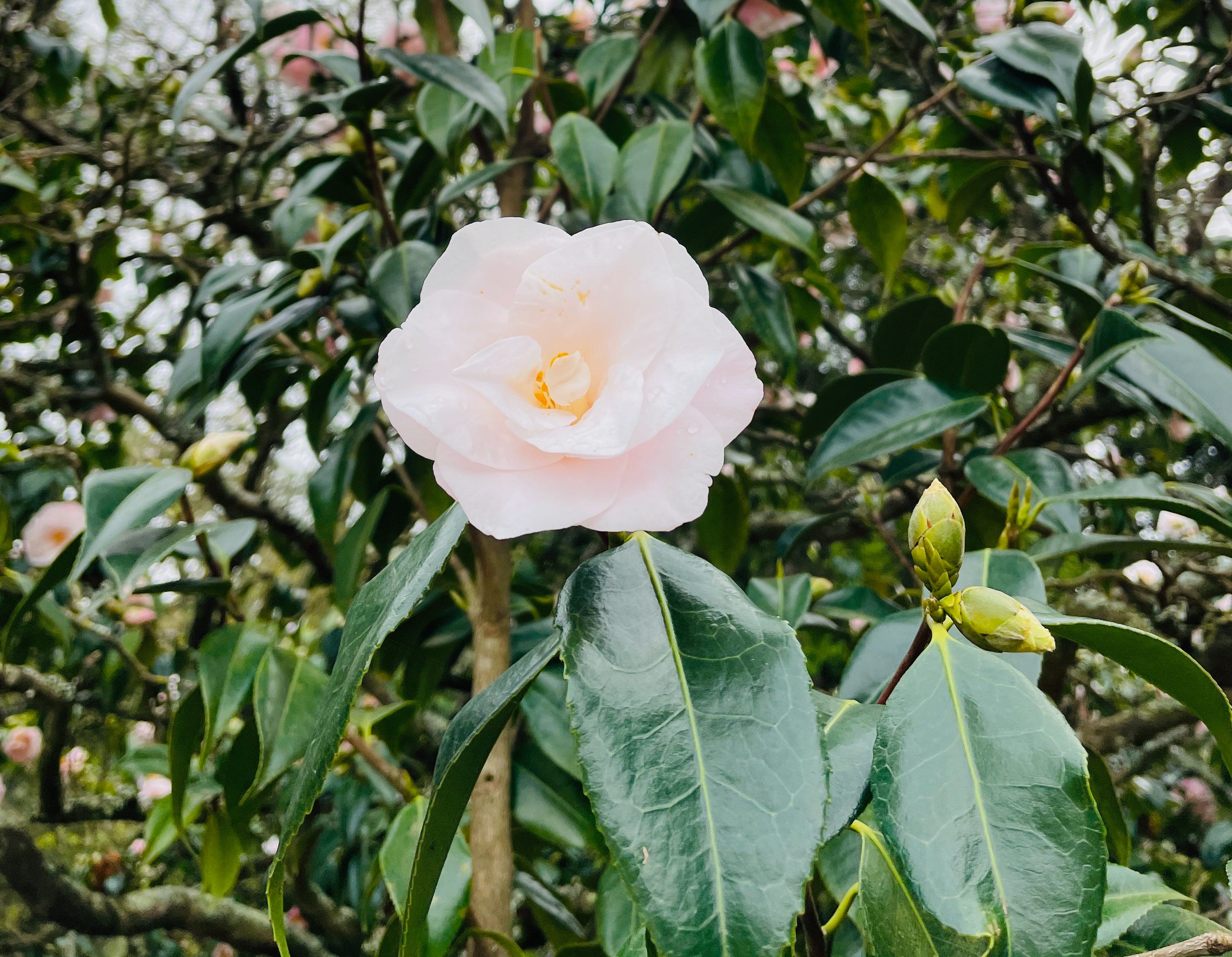
I started studying and practising chá dào (茶道) — The Way of Tea — over a year ago.
The Way of Tea sees our every mindful encounter with tea as a space for inner cultivation of the mind and body, within the vessel of outer form, flow, ritual, and the four elements (air, water, fire, earth), while opening up a dialogue between these inner and outer landscapes.
The practice of sitting with tea as medicine is sensing in her essence the true nature that is also our own, and through her, remembering the way back to our own true nature.
When I first started my practice of sitting with tea in meditation, I found my mind wandering and being pulled in many different directions of inspiration and ideas.
That’s a good one, that’s what I’m going to do! As I sat with tea, my mind filled with these streams of reactions to the inspiration that found me.
How amazing that sitting with tea is bringing me all these ideas and so much inspiration, I used to think to myself as I sipped my tea.
Once I finished my tea, I would grab my notebook and write down all the ideas and reflections that had come up while sitting with tea.
At yet other times, when I found myself in a state of inner and outer tension, sitting with tea enabled me to connect to a quiet voice within — a gentle internal compass subtly pointing me towards the direction that was right for me.
In the days after the ground beneath my feet gave way, and I fell, I found myself coming back in a new and different way to tea, and to the teachings of chá dào.
This time, I heard words from my teacher, Lera, that I hadn’t heard (or hadn’t been ready to hear) the first time round —
"The point of sitting with tea is not to let yourself be led down paths of stimulation and inspiration, and ideas. Of course, that is very difficult, because many of us find the act of sitting with tea itself very inspiring, since tea has such a power to soothe and nourish us.
But if your sitting with tea becomes about seeking out new ideas and inspiration instead of being with tea — really being with her — then you can sit with tea for ten, twenty, fifty years, and nothing will change.
You will be exactly the same as you are, as if you had not sat with tea."
This time, in choosing to really sit and be with tea, instead of allowing myself to be pulled escape into different directions of inspiration, I saw in tea a reflection of myself at this moment.
What was different about the me who was sitting with tea at this moment, as far as I could tell, was that I was exhausted and depleted in a way I had not felt before.
I couldn’t tell the difference between myself and the edges of despair.
And I could sense there was a fast-approaching deluge that I would soon need to reckon with — an ancient, giant iceberg of emotions within me that was melting rapidly into high waters, preparing for surge and flow.
It made me fear that this time, I might not make it back out.
Yet it was this time of despair that helped me hear and embody what I didn’t have the perspective to truly understand before —
I am neither the brilliant ideas and inspiration that find me, nor am I the fear and despair that visit me, from time to time in life.
I am the one who witnesses and holds this realization.
Not going out the way we came in
While in my state of free fall in the darkness, I woke up one morning to news about the unexpected death of my high school literature teacher, Mr Perry.
Mr Perry had helped instill in me my undying love for literature, theatre, and the arts, and had been one of my greatest sources of support, encouragement, and guidance in realising my dream of moving abroad to study in the US after high school in Singapore.
Two years ago, while preparing for my move from London to Porto, I had heard that Mr Perry had moved back home to London after retiring from his decades-long teaching career in Singapore.
I should get in touch to meet up before I leave London, one part of me thought.
By then, I hadn’t seen Mr Perry in almost two decades. Part of the reason I had put off visiting him again and again over the years was that, with the multiple career pivots I had made, which required me to start again "at the beginning" each time, I had come to see myself as somewhat of a professional development laggard in comparison with the trajectories that my former high school classmates seemed to be on.
I had felt an acute sense of inadequacy, even shame, at the thought of showing up in front of Mr Perry as his former student who seemed to have gone on to continuously miss the mark along the way.
Even after I was well into my legal career at one of the world’s top international law firms, I convinced myself that I was still inadequate because I was "only just" a mid-level lawyer while my former high school classmates who embarked on their legal career paths fresh out of university had already become very senior lawyers or partners of their law firms.
I’ll meet up with Mr Perry when I become a senior lawyer, I would reason with myself. I should really be more "legit" when we finally meet after all these years.
Then, I was promoted to senior lawyer, but at the time Mr Perry moved back to London, I had also quit my legal career to venture into the wild unknown.
The other part of me spoke up — I can’t meet him now. I don’t even know what I’m doing with my life. How would I explain my life to him? I’ll meet him next time, when I come back to visit London, and I’ve figured my life out.
This was the part of me that won the argument, so I left London for Porto without saying hello or goodbye to Mr Perry.
And now, now it was too late. And I still hadn’t even figured my life out, ffs.
I cried in a way I hadn’t been able to cry for a long time. I cried — for the loss of Mr Perry, for the walks in spring time (his favourite season) I would now never get to have with him in London, for the stories I would now never get to exchange with him, for how the time he had been so looking forward to, had been cruelly taken from him just as he reached for it — for the absolute unfairness of it all.
The unfairness of life.
The unbearable pain of being.
Somehow, the way that this unbearable pain of being demanded my full attention, also helped me to unbind myself from the grip of my mind, from the grip of the language of words and the prison of narrative mazes I had built myself into.
Words seemed trite to me now. Words were nothing short of wholly inadequate. Words were just words. Pointless.
I found that I needed to devote myself to just sitting with tea, and being with tea, and with my emotions, my memories. They were what felt real. Not words.
I wanted to devote myself to remembrance, in the moment, of what would likely become harder to remember with time.
I wanted to devote myself to lighting a candle in the present, in honour of a flame that had been prematurely extinguished, as time kept slipping uncontrollably out of our hands.
I wanted to devote myself to feeling the unbearable pain of this moment in my life, that was scorched by the burning away of a version of mother-daughter relationship that I had spent years believing I was making progress towards, before being forced to accept it could never exist.
The unbearable pain of not being able to be the person I believed I needed to be, of not having the childhood and relationships with my parents I wanted and believed I needed to have, in order to be truly happy and successful in this life.
I sat with tea. I drank tea, I tasted it, I felt it wash into all the different layers of my being.
This was real.
Tea was real. My being was real. I was real.
This life, right now, was real.
And in that moment, I knew.
I knew it didn’t actually matter at all that my life felt like a mess to me, and that I couldn’t already be the best version of my self who was living the best version of my life, when I met my old school teacher.
Now I knew, that Mr Perry wouldn’t have cared.
All that would have mattered to him was being able to show me, his old student, his favourite spring flowers blooming in his favourite park in London.
After all this time.
The tea I drank flowed into the rivers of salt within me, pooling into a lake within my heart.
Part III
꩜ The imaginal comes to life ꩜
"In many Japanese ghost tales there is a particular time of day known as Ōmagatoki (逢魔時)11 around twilight, when strange things step out of the shadows and the imaginal comes to life."
— Beth Kempton, Kokoro
Although I had supposedly lost faith in words, as part of my personal tribute to Mr Perry (who had loved words, and who had shown me all the different ways I loved words), I wanted to read again.
I went to my bookshelf and pulled out my favourite play by my favourite playwright, introduced to me by Mr Perry in literary practical criticism class all of 21 years ago.
Every time I read it, this play originally published in 1993, I cry. In both awe and heartbreak.
How not to, at such an ingeniously-conceptualized play of ideas interweaving art and science, a profound commentary on the parallel tragicomedies that are the human condition and the inevitable heat death of the universe, moving purposefully, elegantly, and dazzlingly between past and present, until both past and present unite to fully merge into a single scene on stage, culminating in a heartbreaking ending for the audience in the present.
An ending which is not the chronological end of the timeline in this chronos-defying play, but rather, a moment of suspension, of kairos, one ending out of infinite ones.12
It is a moment of suspension whose poignancy is devastating, because the audience has shortly before been given sight of the clear light of death (literal) that faces one of the characters, and the metaphorical death that awaits the other character (who does not yet realize he loves her).
Even as Arcadia contemplates chaos theory as a metaphor for life, the play itself seems to be some sort of metaphor for my own life. Each time I discovered a live theatre performance of the play, I would narrowly miss it due to being in the process of enacting my own act of moving between worlds.
The show opened in London’s West End in 2009, while I lived in New York City, the year before I moved to London.
The show moved to Broadway in New York City in 2011, shortly after I had moved from New York to London.
And so I’ve found myself still waiting and searching, after all these years, for a live performance of Arcadia that I can finally watch.
Thomasina: Yes, we must hurry if we are going to dance.
Valentine: And everything is mixing the same way, all the time, irreversibly…
Septimus: Oh, we have time, I think.
Valentine: … till there’s no time left. That’s what time means.
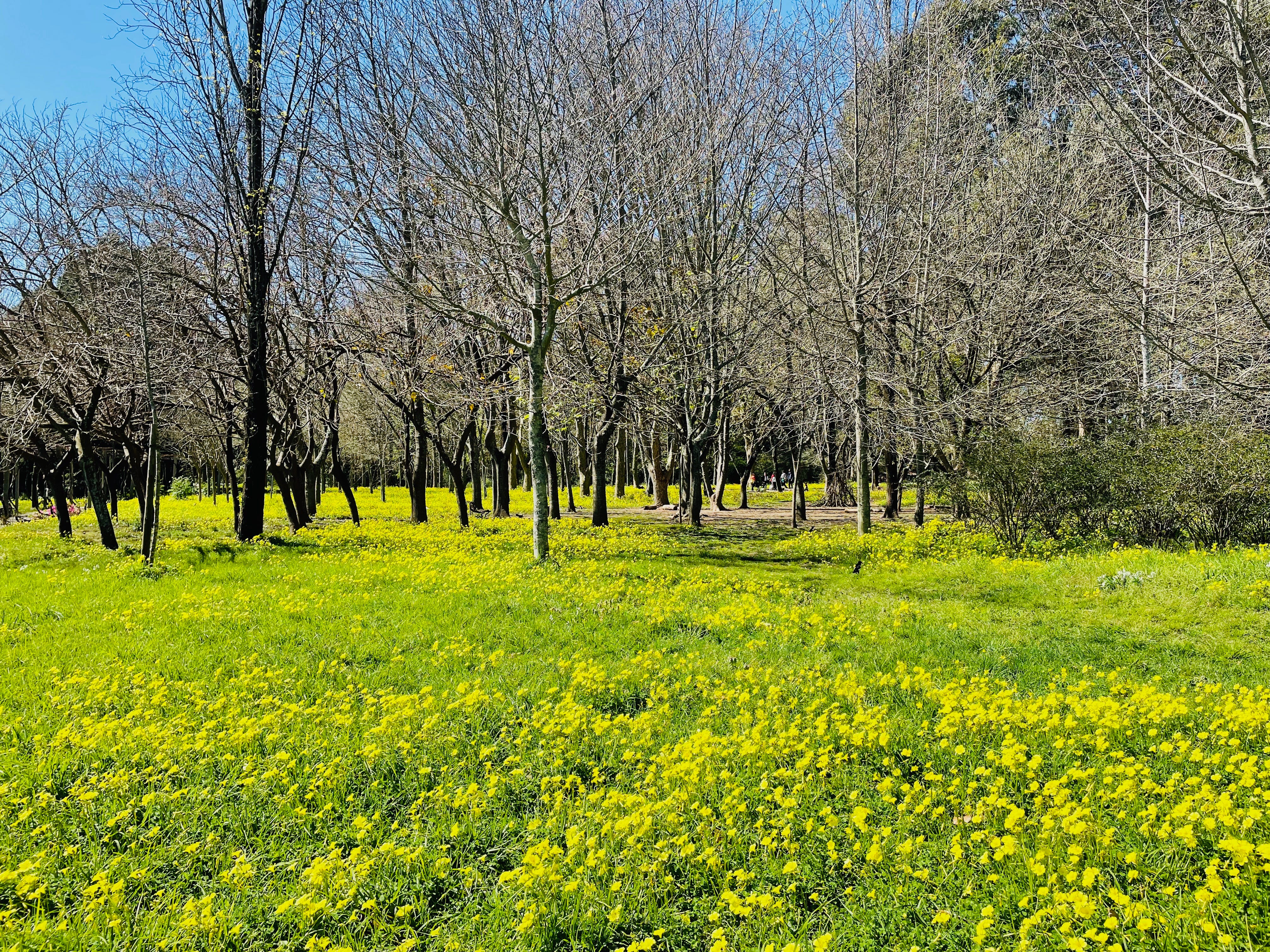
Re-reading Arcadia again after all these years, in tribute to Mr Perry, I pick out the lines he had us discuss in class 21 years ago —
꩜ "We shed as we pick up, like travellers who must carry everything in their arms, and what we let fall will be picked up by those behind. The procession is very long, and life is very short. We die on the march, but there is nothing outside the march so nothing can be lost to it." — Septimus, Act I Scene 3
꩜ "It makes me so happy. To be at the beginning again, knowing almost nothing... relativity and quantum (theories) looked as if they were... the theory of everything. But they only explained the very big and the very small. The universe, elementary particles. The ordinary-sized stuff which is our lives, the things people write poetry about — clouds — daffodils — waterfalls — and what happens in a cup of coffee when the cream goes in — these things are full of mystery, as mysterious to us as the heavens were to the Greeks... it’s the best possible time to be alive, when almost everything you thought you knew is wrong." — Valentine, Act I Scene 4
I also pick out my own chosen lines, that I would have wanted to discuss with Mr Perry 21 years later, during our spring time walk in Richmond Park (close to his home, and London’s own Arcadia) —
꩜ "It’s all trivial... comparing what we’re looking for misses the point. It’s wanting to know that makes us matter. Otherwise we’re going out the way we came in. That’s why you can’t believe in the afterlife, Valentine. Believe in the after, by all means, but not the life." — Hannah, Act II Scene 7
꩜ "when we have found all the mysteries and lost all the meaning, we will be alone, on an empty shore" — Septimus
"then we will dance" — Thomasina
I pick out all of these words, like I would the flowers blooming at spring time in Richmond Park, so I can bring them to lay at Mr Perry’s resting place, the next time I visit Arcadia.
The After that follows The End
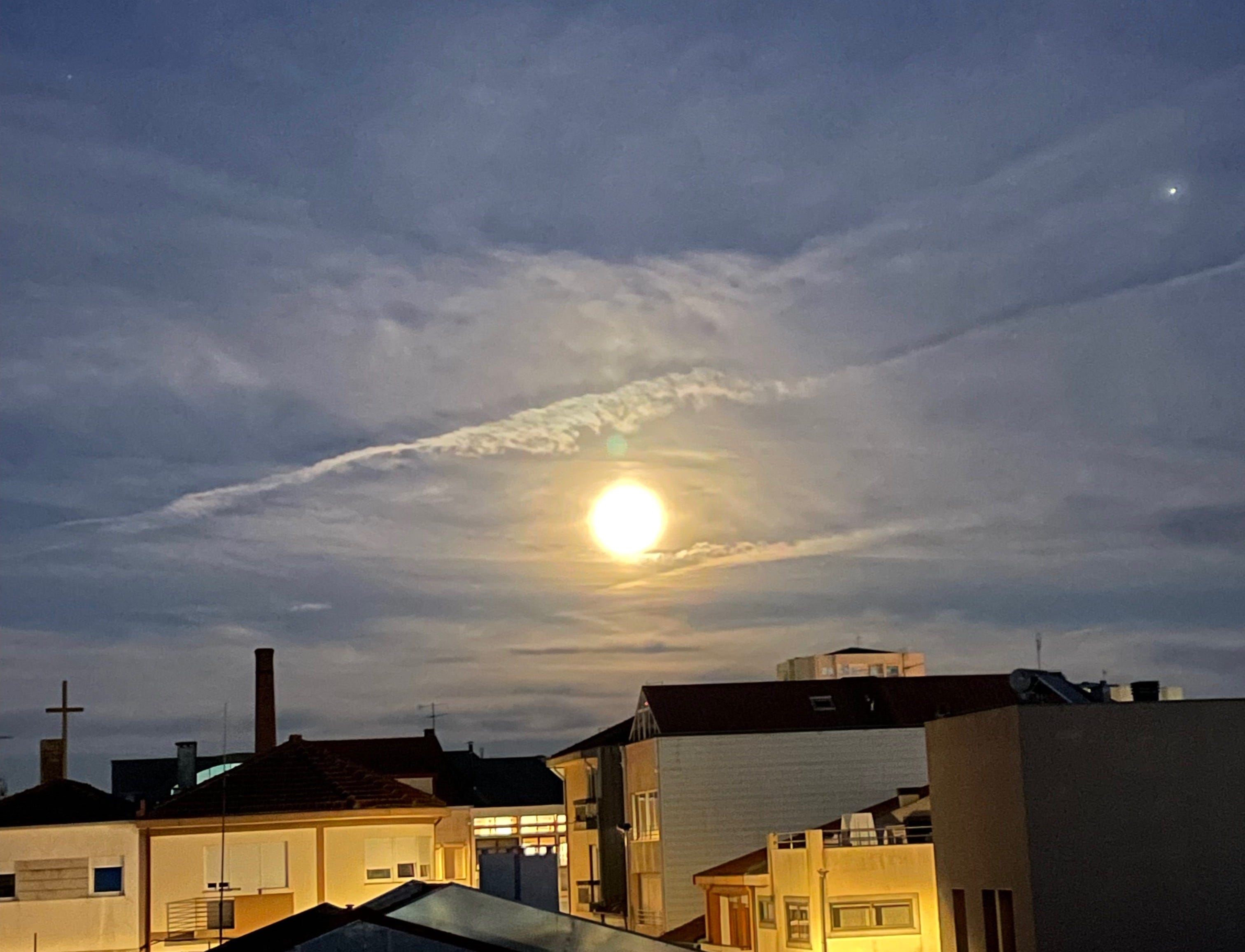
I survived the darkness of this fleeting world guided only by the bright moon in my heart.
— a death poem by the samurai Date Masamune, translation by Beth Kempton (in her book, Kokoro)
In navigating my way through The End in search of an After, I realized that the After I would create depended very much on what I chose to devote myself to, while I was inside The End.
Around the time I found out about Mr Perry’s death, while a previous version of myself was burning away along with the bridge I had set fire to, I drew a spread of cards from The Wild Unknown Archetypes oracle deck by Kim Krans.
Within the spread were two cards that spoke to me of the place I was in, and the initiation I was moving through —
꩜ Place: Bardo
where place is a landscape revealing an emotion13
Bardo — We may receive messages from those who are no longer with us or see visions of lives not yet lived. In the Bardo there is potential to forgive the unforgiveable, to say the unsaid, to see The Unseen, to love the unloved, to let go of all the things that cause us pain. The Bardo suspends us in its spaciousness for just long enough to open us to higher wisdom.14
꩜ Initiation: Agape
where initiation refers to a big moment, juncture, or situation in life that changes us on a fundamental level, and the very fibre of life as we know it — we can’t go back to the person we were before, but we are not yet quite sure who the new self is. Initiations are markers of a deeply personal experience that connect us with the timeless story of humanity.15
Agape — coming from the Greek word, "agape" (ἀγάπη), where having the mouth agape indicates being struck by awe and made humble once again, signifying devotion and unconditional love
The wisdom of this archetype invites a reflection on how things would change if we chose not to put ourselves at the centre of our spiritual practice, but instead place there what we hold sacred.
It invites a reassessment of what we worship every day, whether consciously or subconsciously — what are we elevating? Where does the ladder we’re climbing ultimately lead to?16
〰️
My initiation of Agape while inside the Bardo showed me that whatever we devote our selves to, is whatever we breathe life into and give our life force to.
My mind and my words were powerful tools, but did I want to turn them inwards — to shredding myself up and birthing a force that swallowed up life, or did I want to turn them outwards — to create and build a home and vessel for all that I saw as sacred in this life, so that I could share this with others during (and perhaps after) my lifetime?
As I make my choice, the darkness grows luminous, and I begin to walk my way through it. My hands are overflowing with the flowers of these words that are my devotional offering — to life.
⟢
If this brings up your own thoughts, feelings, and reflections on life, death, and the in-between, please share as you feel called to (either in the comments below, through personal message, or directly to this email, if you are subscribed).
I’ve created and opened up this space for conversation because I believe that, after all, part of the meaning of life is for us to exchange our perspectives and reflections on life, death, and the in-between.
Osho, The Book of Secrets
Shugchang, Padma (editor); Sherab, Khenchen Palden & Dongyal, Khenpo Tse Wang (2000). A Modern Commentary on Karma Lingpa's Zhi-Khro: teachings on the peaceful and wrathful deities. Padma Gochen Ling, as quoted from footnote 10 at Bardo — Wikipedia
from Pema Chödrön’s talk, Embracing the Unknown, where she discusses how lessons from The Tibetan Book of the Dead are no less relevant for daily living
Ōmagatoki (逢魔時) — literally translating to “the time of encountering demons”
I explore these two concepts of time — chronos and kairos — in If Loneliness Was A Flower
Kim Krans, The Wild Unknown Archetypes Deck
"Bardo" interpretation guidance from Kim Krans, The Wild Unknown Archetypes Deck
Kim Krans, The Wild Unknown Archetypes Deck
"Agape" interpretation guidance and prompts from Kim Krans, The Wild Unknown Archetypes Deck
Suyin, thank you for sharing this very beautiful and moving contemplation. My circumstances are different from yours, but a lot of the emotions and insights you wrote about resonated with me. I also experienced something like a "death of self" a few months...it felt like my world was collapsing. But actually all that died was an image of myself that was impossible to fulfill, and all that collapsed was the false worldview I had built up around it. Far from the death of my self, these things had to die in order for me to actually live.
"I will do ____ once I get my life together again." I relate to this too much. Only years later do I realize that I was so busy trying to "figure myself out" that I forgot to live. I've definitely neglected friendships and become more distant with people not due to anything they'd done, but because I wanted to hide my problems. Of course when I really think about it, no one is actually judging me and they care about how I am doing regardless of my "success," just like I would in their position.
Two years ago, I found out that an important mentor of mine passed away - Professor Smith, who got me into philosophy in college (which ended up being my major). He pretty much disappeared halfway through my time at school; he left and then no one could contact him. His death was the first news I'd heard of him since then.
What I loved about Professor Smith is that he didn't just teach philosophy, he *lived* it and inspired his students to do the same, including me. But...creating one's own philosophy of life and especially to live it out is quite difficult, actually. Yet I still believe in it, and I think if anyone could understand how hard it is, and how lost and directionless one can be in the midst of it - it definitely would have been Professor Smith.
I did not know Mr. Perry, obviously, but from how you've described him, it seems that you are carrying on a bit of his spirit and still living out what he inspired in you. I believe that's the best we can do, for those who have passed on, to keep alive what they gave to us so that it may be passed on to others in time. To continue the cycle of regeneration and renewal, to ensure that there will be a rebirth after death.
my dear Suyin, this piece, like all your pieces, moved me deeply to tears. Thank you for your depth, your stories, and for sharing the intimate ways you are navigating and making sense of this world -- I see myself in much of it. I am so deeply grateful to have a beautiful soul like you in my life, as a friend, as a sister. Going to leave my computer now and go for a walk and sip in life through my senses as I continue to muse on your words. so so much love to you, dear friend ♥️